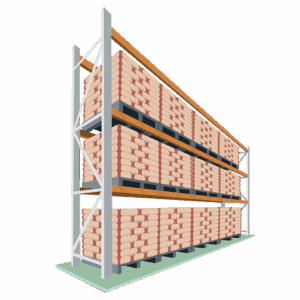
The 1300 x 1100 mm plastic pallets are designed with a focus on sustainability, efficiency, and ease of use, combining impressive load capacity with low pallet weight. Made from recycled plastic using injection moulding, these pallets are fully sustainable, reusable, and 100% recyclable. With optional customization features, such as tailored colors and logos, these pallets can be seamlessly adapted to meet your logistics needs.
The advantages of 1300 x 1100 mm plastic pallets
Q-Pall’s plastic pallets stand out due to their innovative design and advantages over traditional wooden pallets:
Sustainable and clean
- Made from recycled plastic.
- 100% recyclable, contributing to a circular and sustainable economy.
- Resistant to moisture, chemicals, and extreme temperatures.
Lightweight and safe
- Easy to handle: No nails, splinters, or sharp edges.
- Lighter than wooden alternatives, leading to lower transport costs and improved safety.
- Safe and clean for use in various industries.
Efficiency and cost savings
- Reduced CO2 emissions through more efficient use of space in warehouses and trucks.
- Improved cost-per-trip efficiency: Less damage to goods and longer lifespan than wooden pallets.
- High load capacity relative to its weight.
Hygienic and low-maintenance
- Easy to clean and dry: Ideal for industries with strict hygiene standards, such as food and pharmaceuticals.
- Resistant to mold, moisture, and pests, exempt from ISPM-15 treatment, making export easier.
Applications: versatile and practical
The 1300 x 1100 mm plastic pallets are designed for a wide range of applications, making them versatile and practical for different industries:
Intralogistics
- Reusable and durable: Perfect for use in warehouses, distribution centers, and retail environments.
- Compatible with automated systems: Ideal for modern logistics operations.
- Suitable for high racks and block stacking, with robust models for intensive use.
Export and international transport
- ISPM-15 exempt: No treatment required, unlike wooden pallets.
- Water-resistant: Suitable for use in humid or challenging environments.
- Global dimensions: Ideal for use in Europe, America, and Asia.
- Lower transport costs: Thanks to the lightweight design and space efficiency.
Sustainability and circularity
Q-Pall’s plastic pallets contribute to a sustainable and circular economy. Manufactured from recycled plastic, they reduce waste and lower CO2 emissions during production. Additionally, these pallets can be fully recycled and reused in the production process at the end of their lifecycle.
Key sustainability benefits:
- Reusable, durable, and recyclable: Perfect for companies focusing on eco-friendly logistics.
- Lower CO2 emissions: Through space optimization during transport and storage.
- Longer lifespan: Reduces the need for frequent replacements, saving costs and waste.
Options within the 1300 x 1100 pallet range
Q-Pall’s plastic pallets are available with various customization options to meet your company’s unique needs:
- Open or closed deck: Suitable for different types of loads and applications.
- 3 or 6 runners: For stability with heavy loads or use in racking systems.
- Versatile usage: Available in Medium and Heavy variants.
- Customization: Options for tailored colors and logos, ideal for branding and ownership identification.
- Anti-slip and stacking pins: For added grip and safety.
Why choose 1300 x 1100 mm plastic pallets from Q-Pall?
The 1300 x 1100 mm plastic pallets from Q-Pall are a future-proof choice for businesses aiming for efficiency, sustainability, and cost savings. With a wide range of options and a design optimized for modern logistics, these pallets provide a reliable solution for any transport or storage challenge.
Advantages of Q-Pall plastic pallets:
- Sustainable: Made from recycled plastic and fully recyclable.
- Flexible: Customizable with various options, such as logos, colors, and anti-slip features.
- Efficient: Lower transport and storage costs through space-saving design.
- Reliable: Long-lasting performance and reduced damage to goods.
Whether you need pallets for intralogistics, retail, or international export, Q-Pall’s plastic pallets offer a solution perfectly tailored to your needs.